
Insulation notes
Spray Foam Insulation in Toronto or Blown-In: Which Fits Your Attic
November 21, 2026
Spray foam insulation in Toronto suits an attic when air leakage or awkward roof geometry is the main problem. Blown-in insulation usually fits a large, accessible horizontal attic floor where the main issue is missing depth. Neither is automatically better. The right choice depends on air sealing, ventilation, the roof assembly and access, and only an assessment of your actual attic settles it.
Start with the cause, not the product
A cold room upstairs, a hot top floor in summer or a high heating bill can come from three different sources: too little insulation, air leaking through the ceiling, or a ventilation path that has been blocked. The same symptom can come from any of them, so the choice of material should come last. Before choosing, these questions need answers:
- Is there air leakage, or only insufficient depth?
- Is the existing insulation wet, contaminated, compacted or uneven?
- Are the soffit vents and other openings clear?
- Can the roof assembly accept the proposed solution?
- Will the work keep access to ducts, wiring, light fixtures and fans?
- What thermal level does this project need?
- Are the expected savings measured in this building, or only estimated?
When blown-in insulation fits a Toronto attic
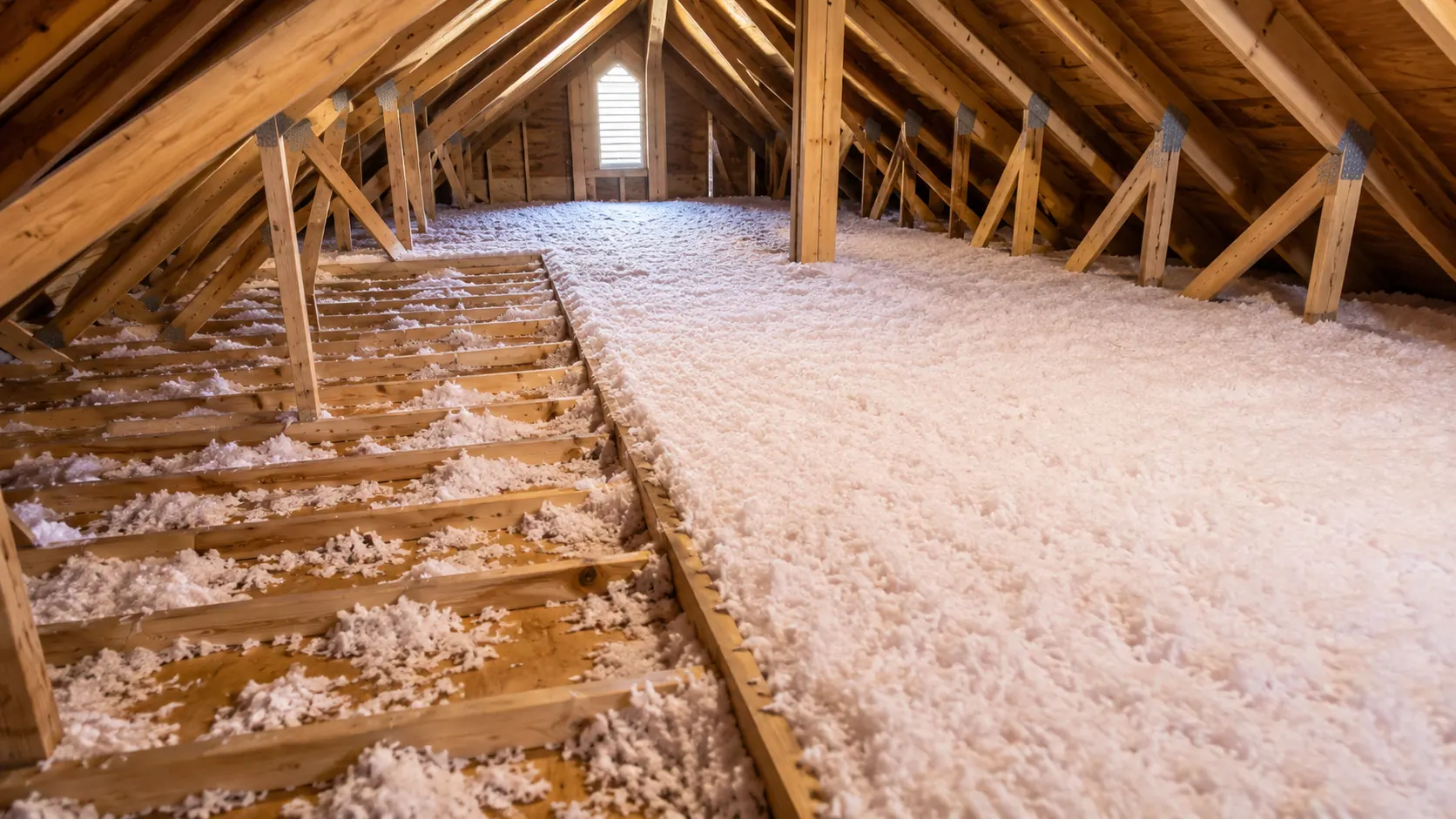
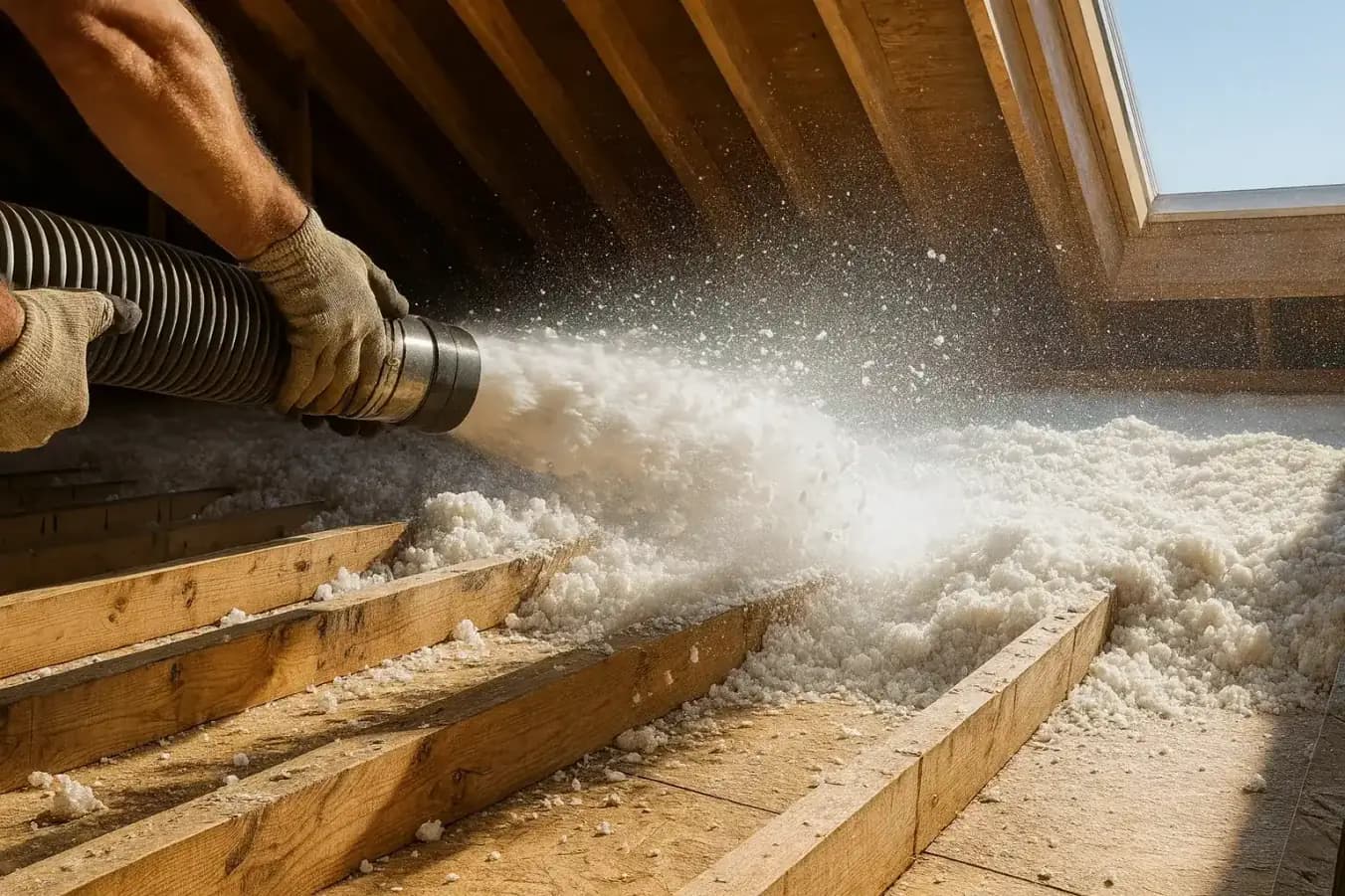
Blown-in insulation is a practical option for a large, accessible attic floor where the problem is depth. It can be a sensible route for an attic insulation top-up when the existing layer is sound and the air leakage has been dealt with first. It does not stop air moving through the ceiling. Loose fill sits on top of leaks rather than sealing them, so a fill job over an leaky ceiling leaves the problem in place.
Signs the attic needs more than fill
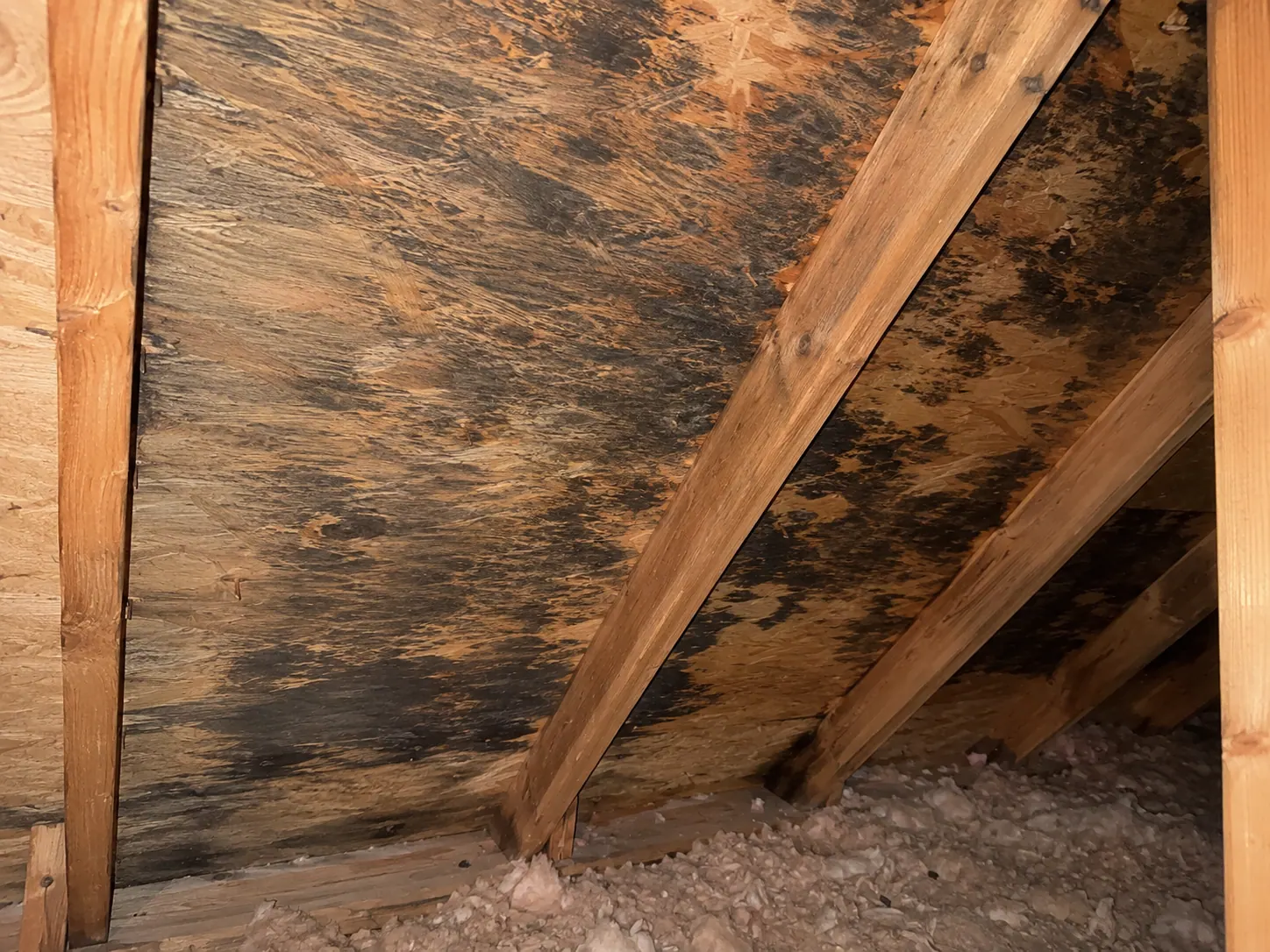
- Staining or dark marks on the underside of the roof deck or framing
- Damp, compacted or contaminated insulation
- Very uneven depth from one area of the attic to another
These signs do not automatically rule out blown-in insulation, but they must be understood before any material is added.
When spray foam deserves a closer look
Spray foam is worth evaluating when air leakage or the building's geometry is the main problem. Sloped ceilings, tight rafter bays, corners and penetrations are places where loose fill is hard to place evenly, while foam is applied in place and can fill irregular spaces. The trade-off is that it changes the roof assembly. Whether it is appropriate depends on the complete assembly, the roof structure and the ventilation path, not on the product category alone. For commercial buildings, the same assessment applies before any scope is written.
Ventilation and moisture decide what is safe
Insulation changes how an attic behaves. A colder attic can make condensation more likely where warm, moist indoor air reaches it, and ventilation does not correct a large air leak on its own. Air sealing and ventilation therefore have to be handled together. Keep the soffit vents clear, keep the ventilation channel continuous from eaves to ridge, and use baffles where they are needed to hold the channel open. A ventilation path blocked years ago is one of the things that has to be checked, not assumed.
Why removal or cleaning can come before new insulation
If the existing material is wet, contaminated or compacted, adding new insulation on top hides the problem. The homeowner then pays twice: once for the new layer, and again when the original issue is exposed. In these cases the written scope may include removal, decontamination or sanitizing before any new product goes in. The scope shows this before work starts, so you can see what is included.
What changes the price, and how to get a quote
We do not publish a price, and this article does not give one. The amount moves with:
- attic size and the horizontal area to be covered
- the condition of the existing insulation and what is found under it
- access to the attic and the work needed to reach it
- preparation and protection of the space
- the solution chosen and any finish required
Quotes are made remotely. From your address, the roof and attic footprint, the age of the house and the attic size, a range comes back without attic access and without booking a visit. [The about page](https://www.eco-therma.com/about) describes this approach. Anything that cannot be established without opening something up is written down as an unknown, not guessed. Each project follows six steps in order: first conversation, remote quote, written scope, preparation and protection, the work, then verification against the written scope. The warranty covers workmanship, and its exact term and coverage are confirmed in writing with the quote, before anything is scheduled. [The warranty and process page](https://www.eco-therma.com/resources/warranty-and-process) sets out the details.
If you want to know what savings to expect, ask whether they are measured in your building or only estimated. The service area covers Toronto and the GTA, and the [service-area page](https://www.eco-therma.com/areas) lists the named areas. To compare options for your own attic, request your free quote.
Where this applies
Questions about this
Tap a question, get a straight answer.
Tap a question and the answer comes back. Anything specific to your attic, we sort out on the call.

Eco-Therma
Usually replies the same day
How much more expensive is spray foam insulation than blown-in insulation in Toronto?
Eco-Therma does not publish prices, and this article does not compare amounts. The difference between spray foam and blown-in insulation depends on the area, the depth needed, the condition of the existing material, access and preparation. A written scope based on your attic is the only way to get a comparison that applies to your building.
How much does it cost to install attic insulation in Toronto?
According to Eco-Therma, no price is published for attic insulation top-up or any other work in Toronto. Attic size, existing condition, access and the work required all change the amount. A remote quote from your address gives a range without an attic visit, and the written scope is confirmed before anything is scheduled.
How good is spray foam insulation for a Toronto attic?
As Eco-Therma explains, its value depends on the assembly. Spray foam is considered where air leakage or awkward geometry is the main problem, and it must suit the roof structure and the ventilation path. No general performance level is claimed here, because the sources consulted do not show that one option is always better for a residential attic.
Does adding blown-in insulation fix a cold room?
Not always. A cold room can come from insulation depth, air leakage or a blocked ventilation path, and loose fill placed over leaks does not stop air movement. An assessment of the actual address is needed to find which cause applies before choosing an attic insulation top-up.

Want this checked in your own attic?
Send your address and the approximate attic size. A remote quote comes back — no attic access needed.