
Residential service in Toronto and the GTA
Soundproofing
Reduce sound transfer through walls, ceilings and floors using acoustic insulation systems.
What the space is telling you
Signs you may need this
The symptom shows up in the room. The cause is usually in the assembly around it, which is what the scope has to name.
- Conversation carrying clearly between bedrooms
- Footsteps overhead heard through the ceiling
- A shared wall that transmits a neighbour's television
- A home office where calls are not private
- A mechanical room that can be heard from the living space
- A basement suite where noise travels both ways
Built for the assembly in front of us
Materials and options
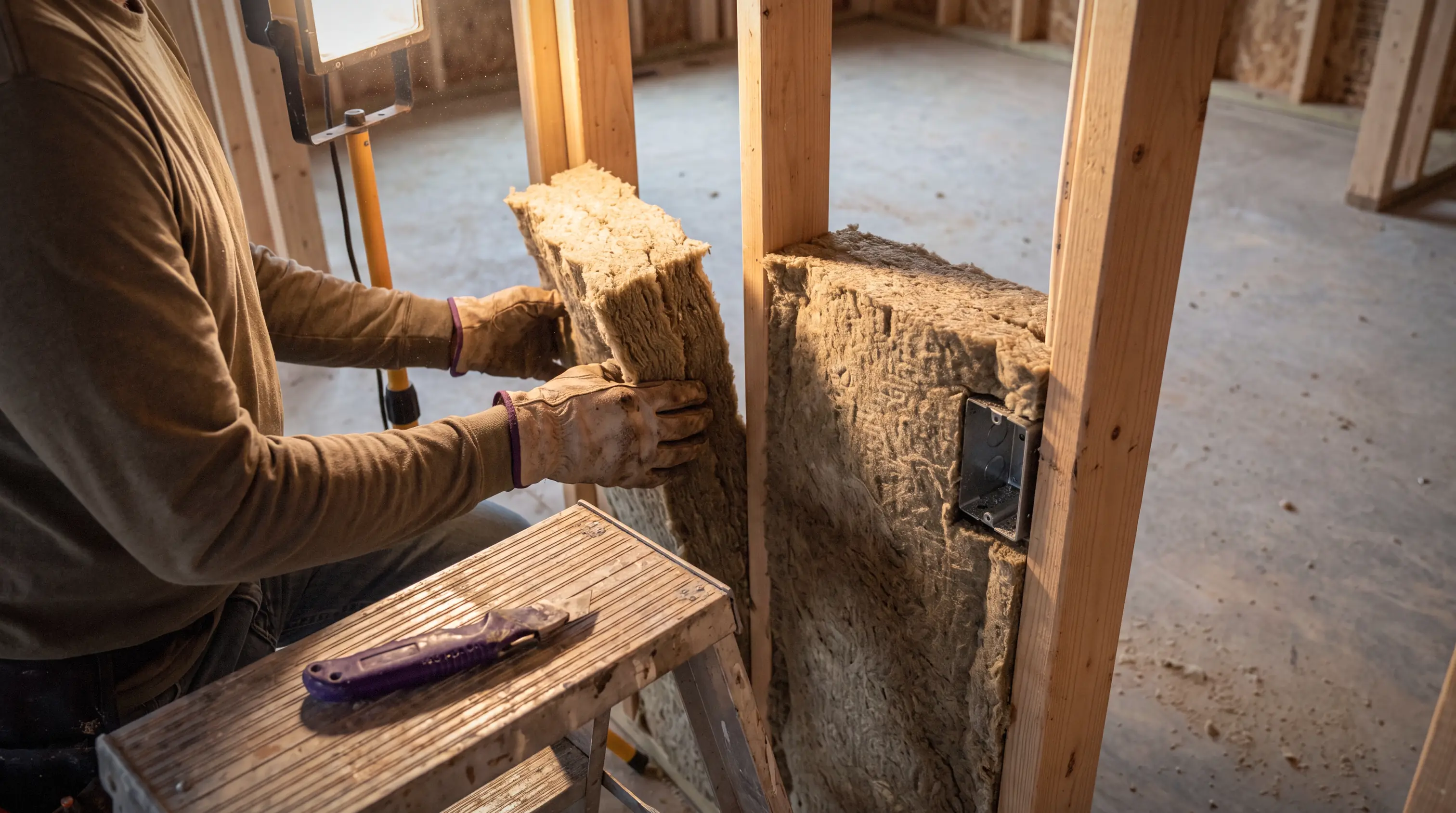
Acoustic mineral wool
Dense batts that absorb sound energy inside the cavity instead of letting it pass through.
Resilient assemblies
Details that reduce the direct mechanical path between the two sides of a wall or floor.
Absorbing sound and breaking the path
Sound travels two ways through a wall: through the air in the cavity, and through the framing that touches both sides. Insulation deals with the first, and it helps noticeably. It cannot deal with the second on its own, because anything screwed to both sides carries vibration straight through. That is why an honest answer includes what will improve and what will not, before the work starts.
Is this the right call for your home?
When it applies
- The wall, ceiling or floor cavity is open or can be opened
- The goal is a clear reduction rather than silence
- The noise is airborne, such as voices, television or traffic
When something else comes first
- The path is a gap, a duct or a shared cavity, which is sealing rather than insulating
- The noise is impact, such as footsteps, which needs the assembly changed, not just filled
No insulation makes a room silent. Filling a cavity reduces what passes through it, and it is often enough to change how a room is used. Anyone promising silence from a batt is selling something else.
How the work runs
Our process
Identifying the path
Whether the sound is airborne, structural, or travelling through an opening.
Sealing the openings
Shared cavities, ducts and gaps, because an open path defeats any material.
Installing acoustic material
Full-cavity fit with no compressed or empty sections.
Assembly details
Where the build allows, reducing the direct contact path between the two sides.
Walkthrough
What changed, and what the assembly cannot do.
About this service
Questions we get on this one.
Specific to soundproofing. Tap a question.

Eco-Therma
Usually replies the same day
Does adding insulation alone stop noise?
Insulation reduces airborne sound through the cavity, which is the easy part. What is left usually travels through the framing and the openings around the wall.
Which walls give the best result?
Walls between bedrooms and living areas, and walls onto mechanical rooms. Doing one wall in a room that is open to the next room changes very little.
Will it stop footsteps from upstairs?
Impact noise travels through structure and needs the floor assembly addressed, not just the cavity below it. We tell you when that is the case.
A practical next step
Get a quote on soundproofing.
Send your address and the approximate size of the space. We come back with a remote estimate and what still needs to be confirmed on site.