
Residential service in Toronto and the GTA
Drill-and-Fill Insulation
Add insulation to eligible enclosed walls or ceilings with limited disturbance to finished surfaces.
What the space is telling you
Signs you may need this
The symptom shows up in the room. The cause is usually in the assembly around it, which is what the scope has to name.
- An older house with finished walls and no record of insulation
- Exterior walls that feel cold from the inside in winter
- A room that is uncomfortable but has no attic above it
- Radiators or vents that run constantly on one wall
- A finished ceiling below an unheated space
- You want the wall insulated without a full renovation
Filling a wall without opening it
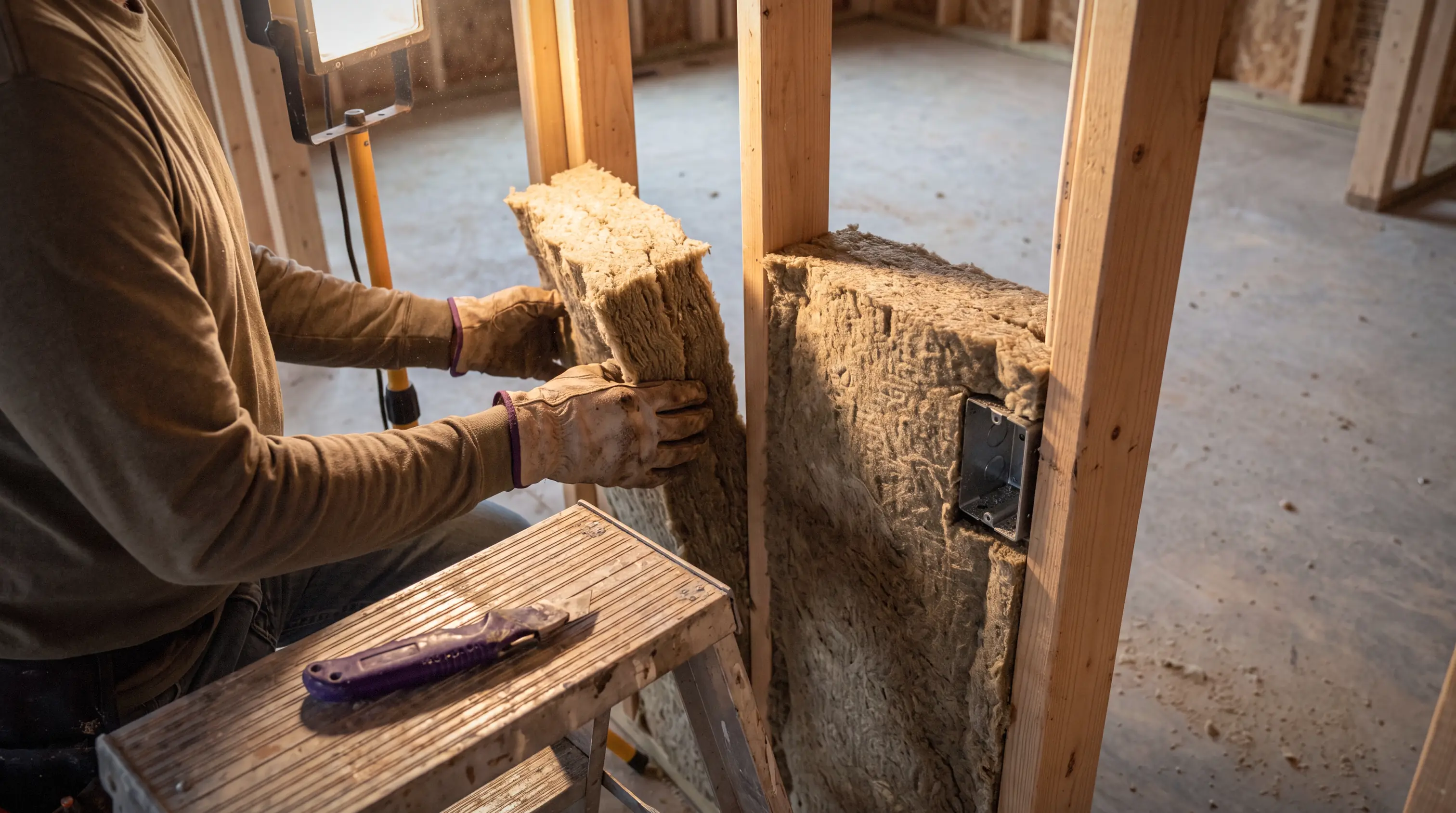
In an eligible wall, small openings are made, the cavity is filled with loose material under controlled pressure, and the openings are closed and finished. The advantage is obvious: the finished surface mostly stays where it is. The limit matters just as much. The cavity has to be genuinely empty and continuous, and the wall has to be built in a way that allows the fill to reach the whole bay. Not every wall qualifies, and the assessment says so before any hole is made.
Is this the right call for your home?
When it applies
- The cavity is empty or only partly filled
- Opening the finished surface is not practical
- The wall assembly allows a continuous fill from top to bottom
When something else comes first
- The wall is already full, in which case the comfort problem is elsewhere
- The surface is being opened for other work anyway, where a fitted material is the better result
- There is a moisture problem in the wall, which has to be found before it is filled
This is the least disruptive option, not the most complete one. A wall opened during a renovation can be air sealed and insulated better than one filled through a hole. When the choice exists, the assessment says which one your wall justifies.
How the work runs
Our process
Eligibility check
Wall construction, cavity condition and whether a continuous fill is achievable.
Locating the framing
Bays are mapped so every cavity is reached and none is missed.
Controlled filling
Material is injected to density rather than simply poured in, so it does not settle later.
Closing the openings
Openings are sealed and prepared for finishing.
Coverage verification
Each bay is confirmed filled before the work is called done.
About this service
Questions we get on this one.
Specific to drill-and-fill insulation. Tap a question.

Eco-Therma
Usually replies the same day
Where do the holes go, and do they show afterwards?
Small access holes are made in each cavity, then plugged and finished. On a finished wall we agree with you beforehand which side they are made from.
Does it work on every wall?
Drill-and-fill works on empty or under-filled closed cavities. Walls already full, or blocked by framing and services, are identified before we commit to the method.
How do you know the cavity actually filled?
Density is controlled at the hose during the fill, and the cavity is checked as it goes. A cavity that will not take material is reported to you, not left silently short.
A practical next step
Get a quote on drill-and-fill insulation.
Send your address and the approximate size of the space. We come back with a remote estimate and what still needs to be confirmed on site.