

Attic heat loss diagnostic
Roof Leaks and Attic Water Intrusion
What you see outside often starts inside the attic.
The short answer
Water entering through the roof lands on whatever is underneath it. Insulation absorbs it and stops working, the sheathing stays wet long enough to stain, and the attic cannot dry if airflow is blocked. That is why the leak is repaired first, the wet material is dealt with second, and new insulation goes in last.
Heat leaves through five places.We check every one.
A cold room is the end of a path, not the start of one. The envelope has four weak points, and which one matters is decided in your attic, not on this page.
- 1One roomAttic inspection at the matching location after rain
- 2Attic moistureMoisture reading of the insulation and the deck
- 3The roof deckCompare the pattern with the roof penetrations
- 4Attic moistureSoffit, baffle and exhaust inspection
- 5One roomLook at where the snow melts first on the roof
Reading the evidence
A visible symptom narrows the cause. It does not settle it on its own, which is what the quote on your own attic is for.
A ceiling stain that darkens after rain
Likely causeWater entering at a penetration or a valley above it
How we confirm itAttic inspection at the matching location after rain
If confirmedRoof repair before anything else
Insulation that is matted, dark or damp in one area
Likely causeRepeated wetting from a leak directly above
How we confirm itMoisture reading of the insulation and the deck
If confirmedRemoval of the affected insulation once the roof is watertight
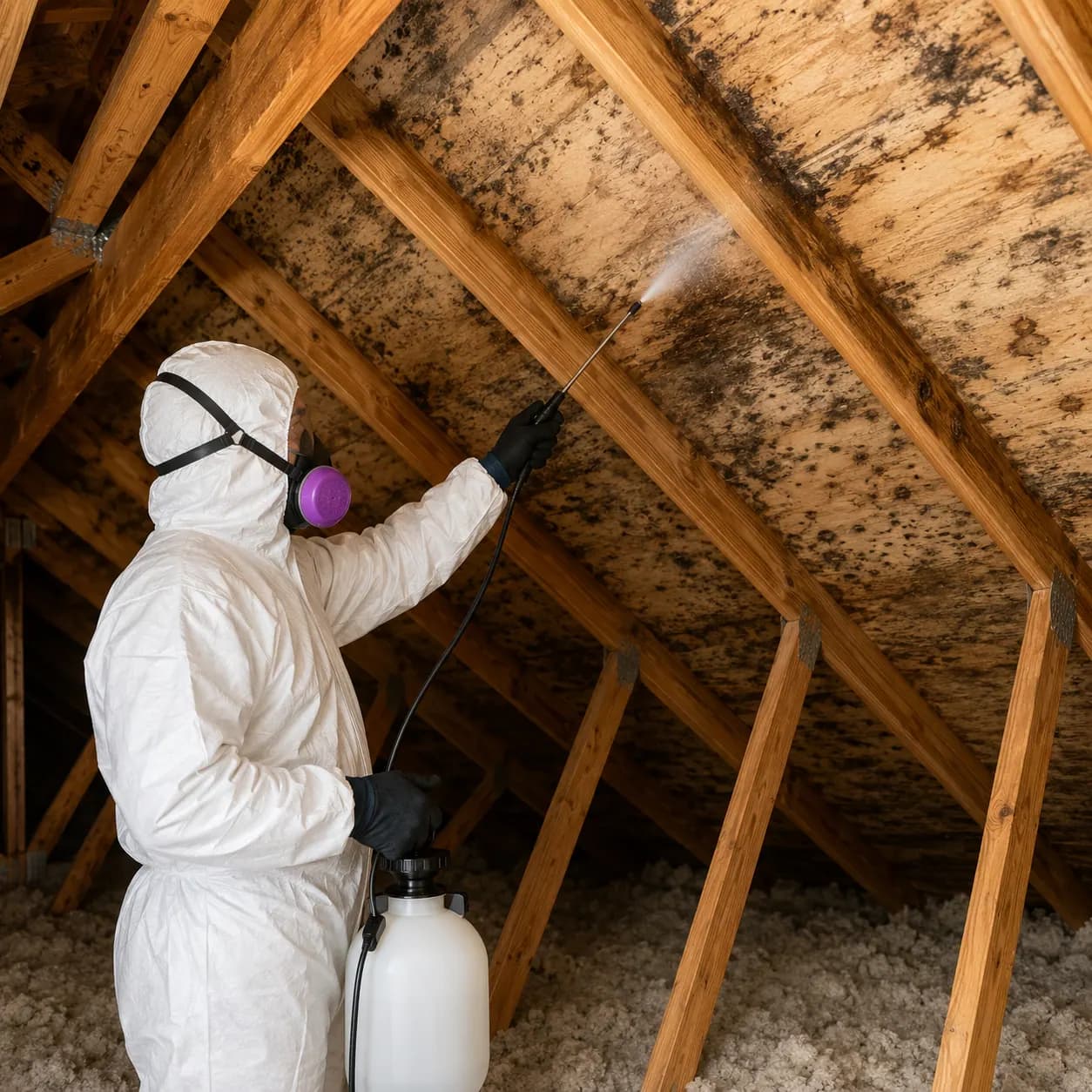
Staining on the sheathing spread across the whole attic
Likely causeCondensation rather than a leak, since a leak is usually local
How we confirm itCompare the pattern with the roof penetrations
If confirmedVentilation and air sealing rather than roof repair
The attic stays damp for days after it rains
Likely causeNo intake or exhaust, so nothing dries
How we confirm itSoffit, baffle and exhaust inspection
If confirmedVentilation correction as part of the sequence
Meltwater backing up behind ice at the eaves
Likely causeHeat loss warming the deck, not a defect in the shingles
How we confirm itLook at where the snow melts first on the roof
If confirmedTreat the heat loss, then reassess the roof
What this page cannot tell you
- This page describes how water moves through a roof assembly and an attic. It is not a roof condition report, and the entry point is confirmed on site rather than from a description.
- A stain is evidence that a surface was wet. It does not by itself establish when, how often, or whether the source is still active.
The recommendation hierarchy
The entry point is confirmed before any insulation work is scheduled. Replacing insulation under an active leak wets the new material the same way it wet the old one.
Primary solution
Roofing Solutions
Roof work that protects what is under it — leaks, edges, ventilation and the insulation the roof is meant to keep dry.
Explore this service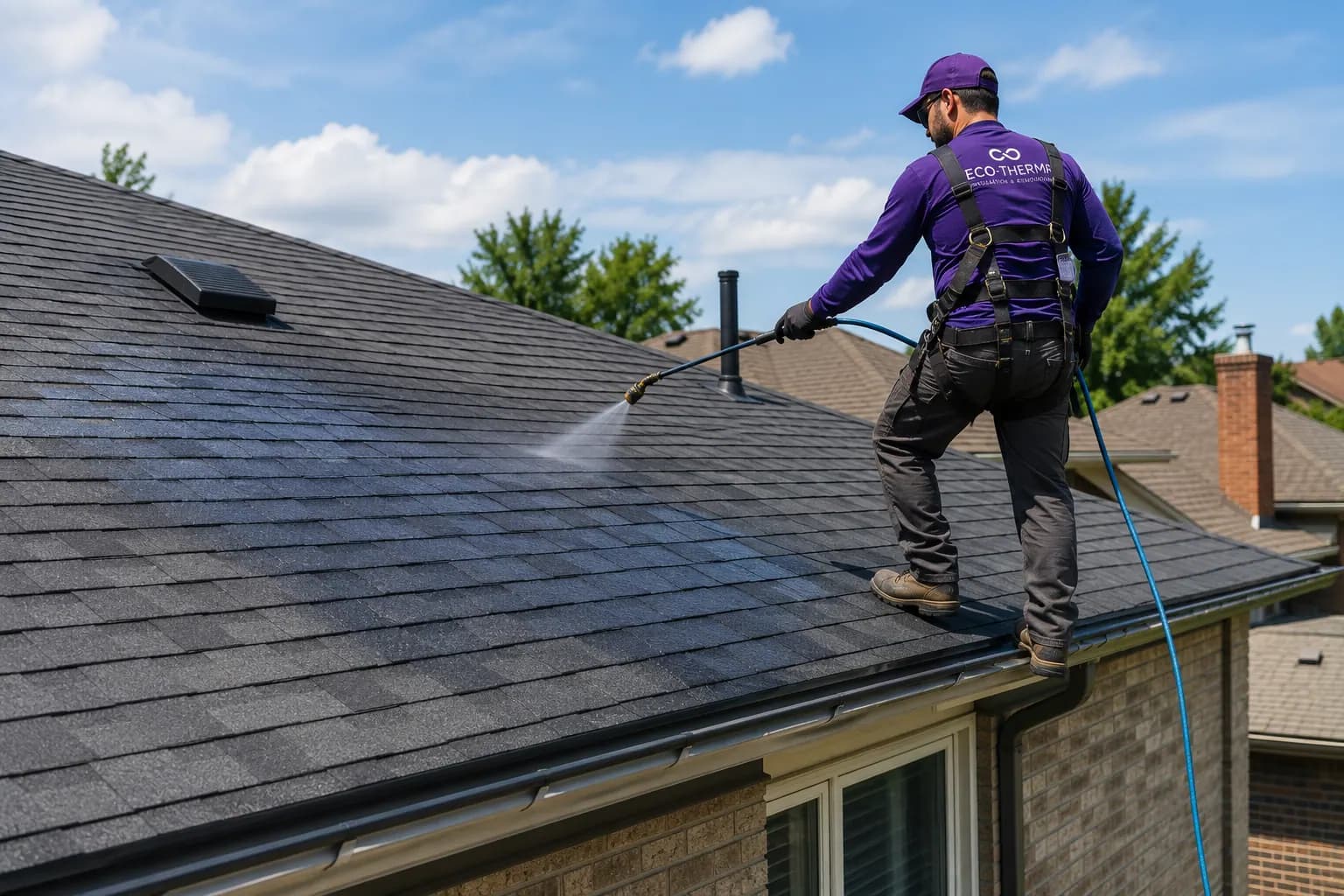
About this problem
Questions homeowners ask us.
Everything below is about roof leaks and attic water intrusion. Tap one.

Eco-Therma
Usually replies the same day
Do you fix the roof or the insulation first?
The roof, every time. New insulation installed under an opening that still lets water in gets wet the same way the old insulation did, so the order is not a preference — it decides whether the work lasts.
Does wet insulation have to be removed?
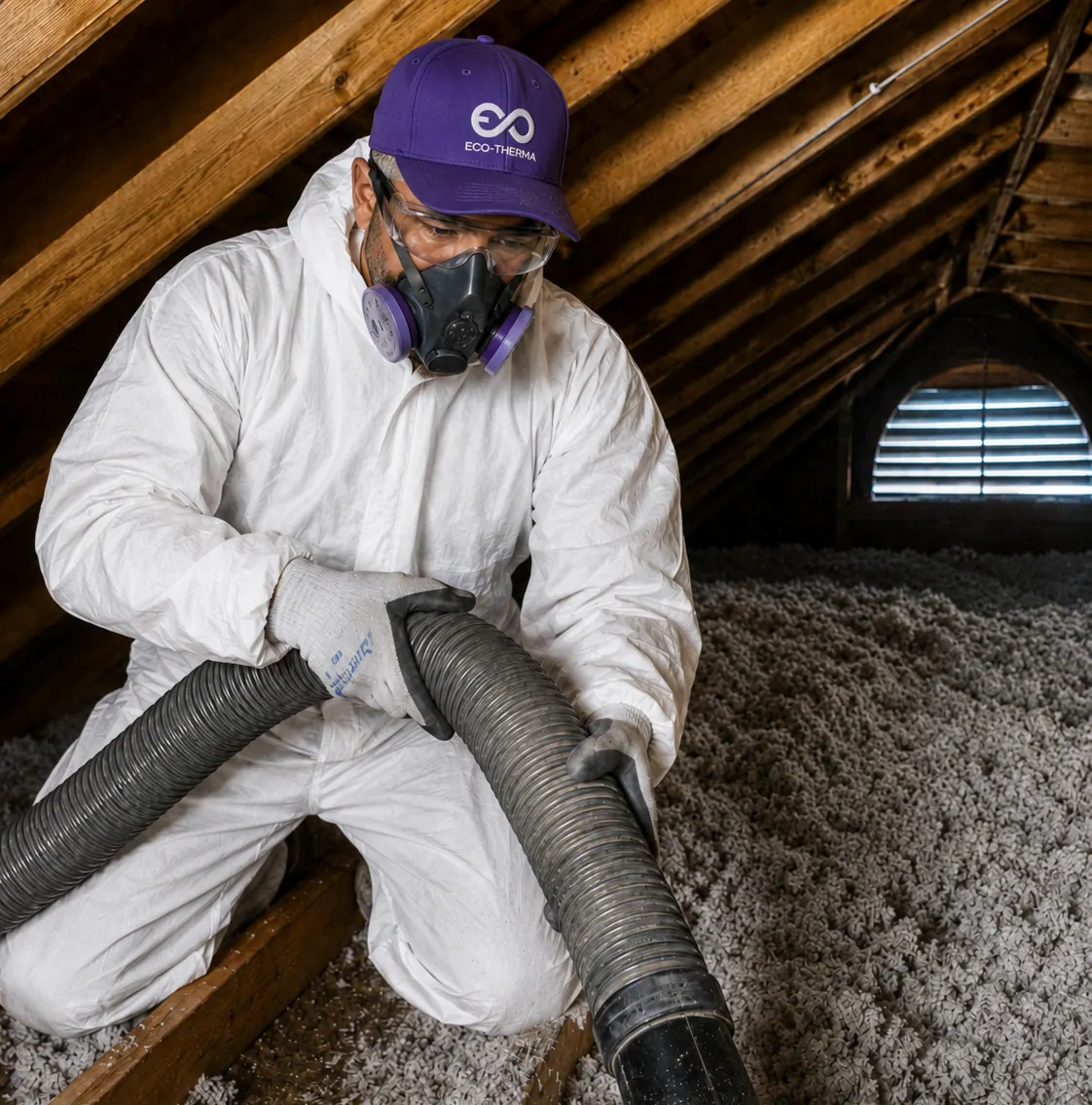
Eco-Therma removes only what was actually wet. Blown-in material that absorbed water loses its R-value and stays damp, while dry insulation elsewhere in the same attic can usually stay in place.
How do you tell a leak from condensation?
A leak is usually local and tracks with rain, concentrated around a penetration or a valley. Condensation is widespread, follows the cold surfaces and the nail heads, and tracks with cold weather instead.
A practical next step
Request a Remote Quote
A remote quote starts and finishes with your address and the approximate size of your attic. No attic access, no waiting on a visit.