

Attic heat loss diagnostic
Poor Attic Airflow
What you see outside often starts inside the attic.
The short answer
An attic needs air to come in low at the soffits and leave high at the roof. When the soffits are blocked, the baffles are missing, or exhaust was added without matching intake, very little air actually moves. The attic then holds heat in summer and moisture in winter, which is why airflow shows up behind several unrelated-looking complaints.
Heat leaves through four places.We check every one.
A cold room is the end of a path, not the start of one. The envelope has four weak points, and which one matters is decided in your attic, not on this page.
- 1Soffit intakeInspection at the eaves from inside the attic
- 2The atticAirflow and exhaust assessment
- 3Attic moistureAttic inspection in cold weather
- 4Roof ventsCount and inspect intake versus exhaust
Reading the evidence
A visible symptom narrows the cause. It does not settle it on its own, which is what the quote on your own attic is for.
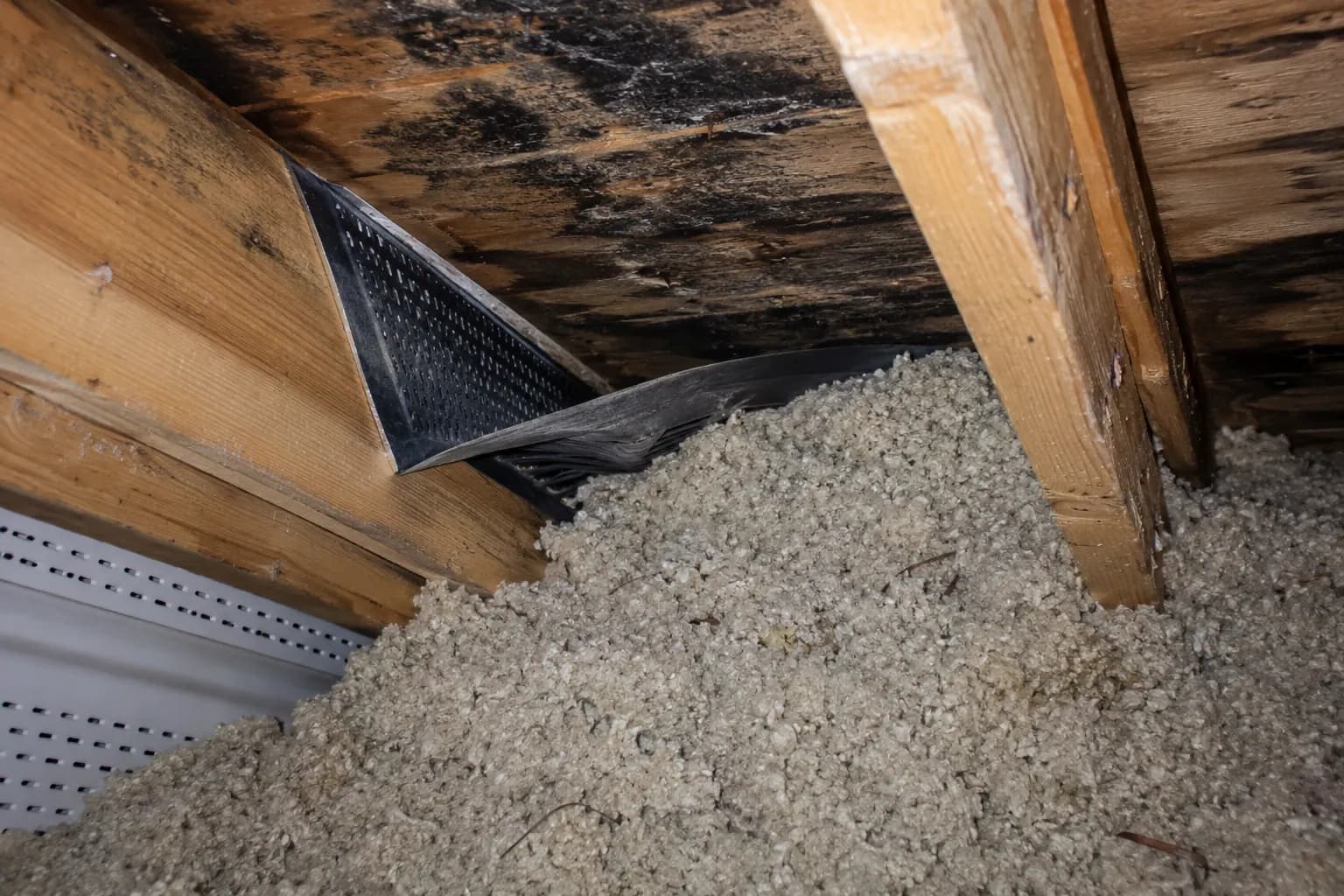
Insulation covering the soffit openings at the eaves
Likely causeIntake blocked, no baffles installed
How we confirm itInspection at the eaves from inside the attic
If confirmedBaffles and intake correction
Very hot attic in summer
Likely causeHeat cannot exhaust through the roof
How we confirm itAirflow and exhaust assessment
If confirmedAttic ventilation and airflow
Damp attic in winter
Likely causeMoisture entering faster than it can leave
How we confirm itAttic inspection in cold weather
If confirmedVentilation balance with air sealing
Multiple roof vents but no soffit vents
Likely causeUnbalanced system pulling air from the house instead of outside
How we confirm itCount and inspect intake versus exhaust
If confirmedRestore intake before adding exhaust
What this page cannot tell you
- Some roof designs have very little space at the eaves, which limits how much intake can be created. We say what is achievable on your roof rather than promise a standard result.
- Airflow is one factor. If insulation depth is also deficient, correcting only airflow gives a partial result.
The recommendation hierarchy
Intake and exhaust are assessed together. Adding roof vents to an attic with no intake moves almost no air, and it can make things worse.
Primary solution
Attic Ventilation & Airflow
Improve soffit intake, baffles and roof ventilation to help control attic heat and moisture.
Explore this service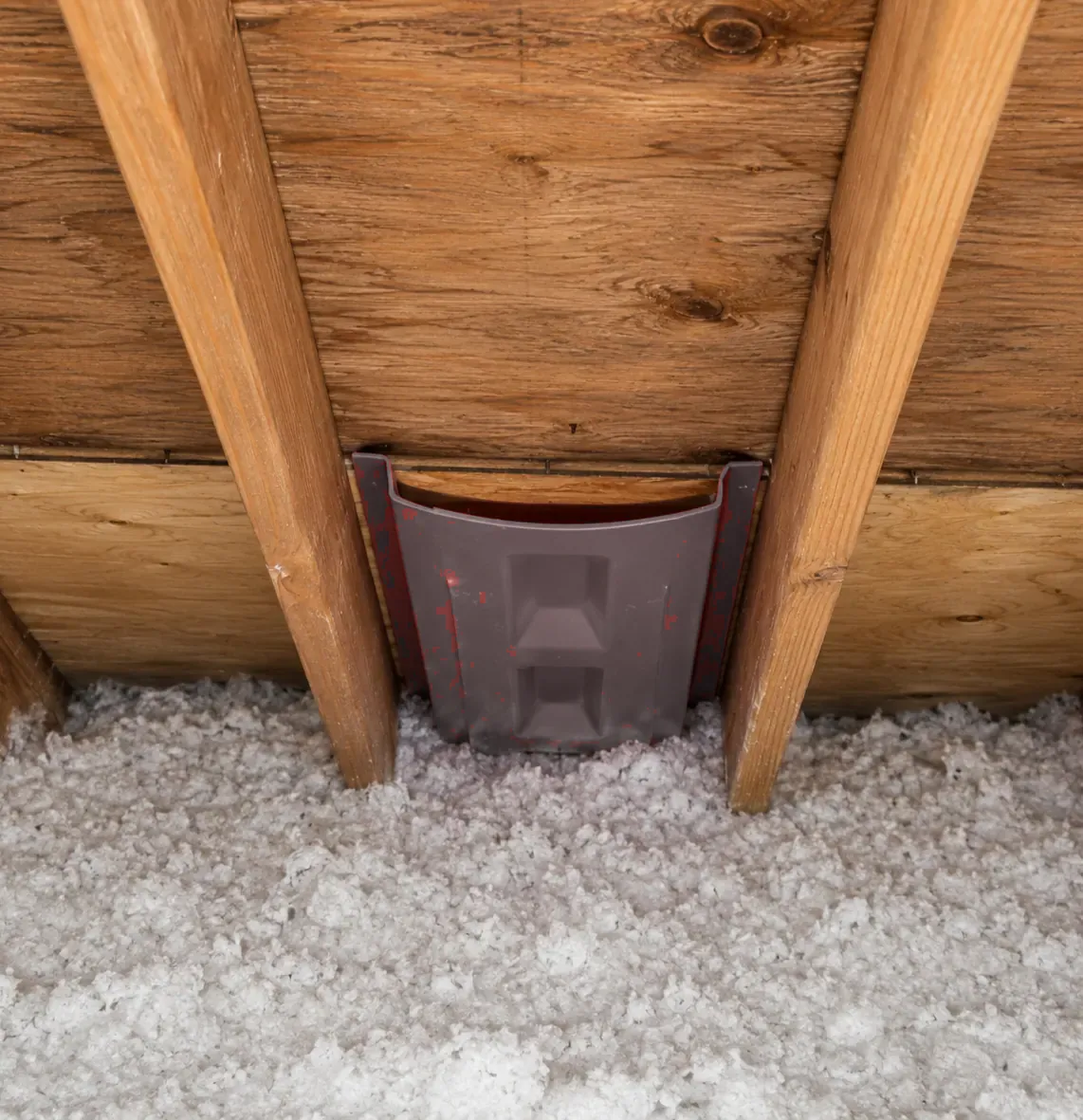
Conditional solution
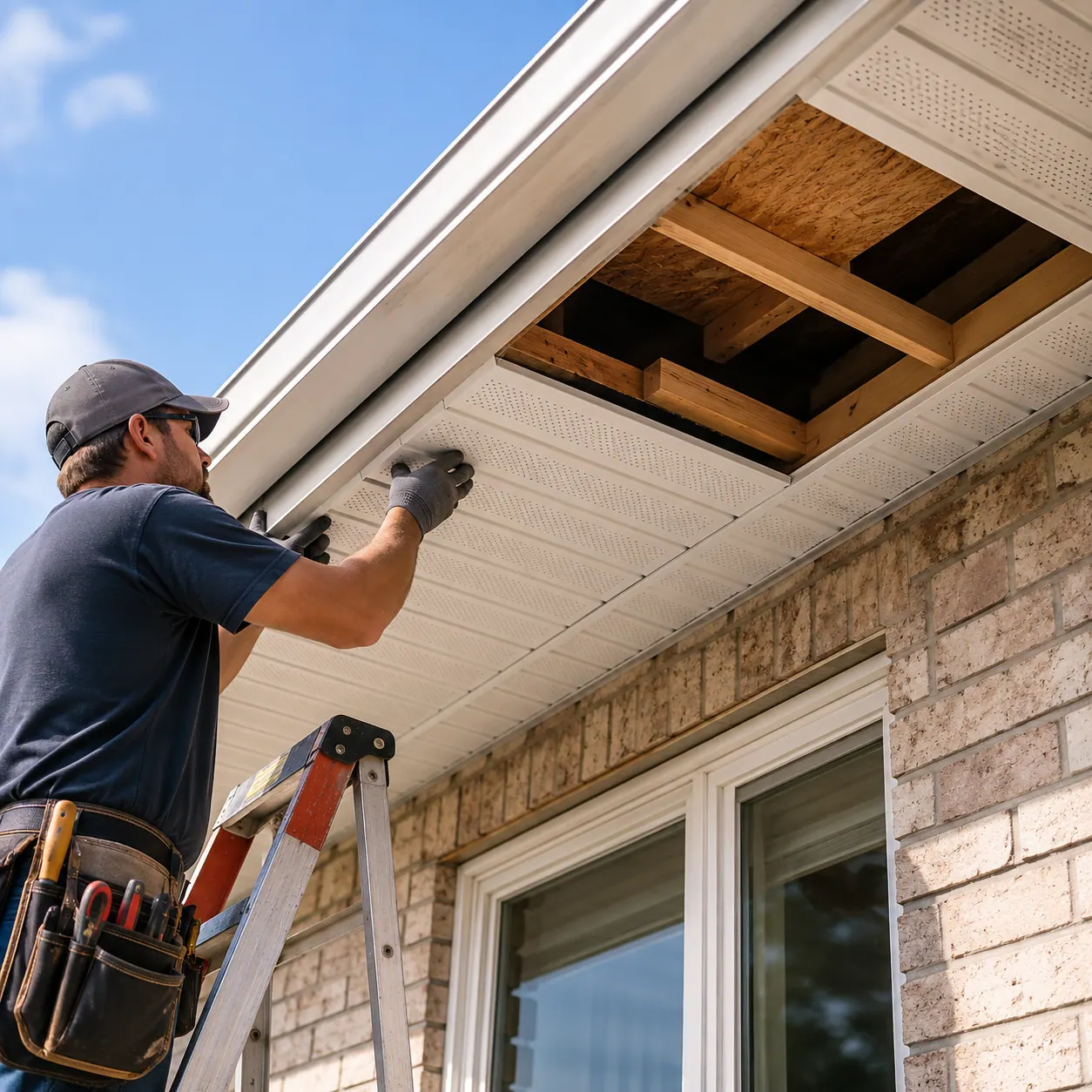
Soffit, Eavestrough & Attic Intake Repairs
Use it: if the soffits themselves are blocked or damaged.
Conditional solution
Bathroom Fan & Duct Venting
Use it: if a fan is discharging into the attic and loading it with moisture.
About this problem
Questions homeowners ask us.
Everything below is about poor attic airflow. Tap one.

Eco-Therma
Usually replies the same day
Do I need more roof vents?
Not necessarily. Exhaust only works with matching intake at the soffits. If intake is blocked, adding exhaust can pull conditioned air out of the house instead of drawing outdoor air through the attic.
What are baffles?
Baffles are channels installed at the eaves that keep insulation from covering the soffit openings, so air can still enter above the insulation.
How do I know if my soffits are actually open?
From inside the attic, at the eaves. From the ground a soffit can look perfectly normal and still be sealed behind by insulation, paint or a solid panel with no perforations. That is why the intake is checked from above rather than from the driveway.
A practical next step
Request a Remote Quote
A remote quote starts and finishes with your address and the approximate size of your attic. No attic access, no waiting on a visit.