
Commercial service in Toronto and the GTA
Mechanical Pipe & Duct Insulation
Thermal, condensation-control and acoustic insulation for mechanical systems.
What the building is telling you
Signs you may need this
These show up in operation long before they show up in a report. The cause is usually in the assembly, not in how the space is being used.
- Sweating chilled-water pipes dripping onto ceilings or equipment
- Hot piping losing heat through a mechanical room
- Ductwork that delivers air noticeably off its set temperature
- Condensation stains on ceiling tiles below mechanical runs
- Damaged, missing or torn insulation on existing runs
- Mechanical noise carrying into occupied space through ducts
Specified for the assembly in front of us
Materials and options
Pipe insulation with vapour jacket
Used on cold lines, where stopping condensation matters as much as the thermal value.
Duct wrap and liner
Applied to reduce heat gain or loss along the run and to limit noise transfer.
High-temperature materials
Used on hot service lines according to their operating temperature.
On cold lines, the jacket is the point
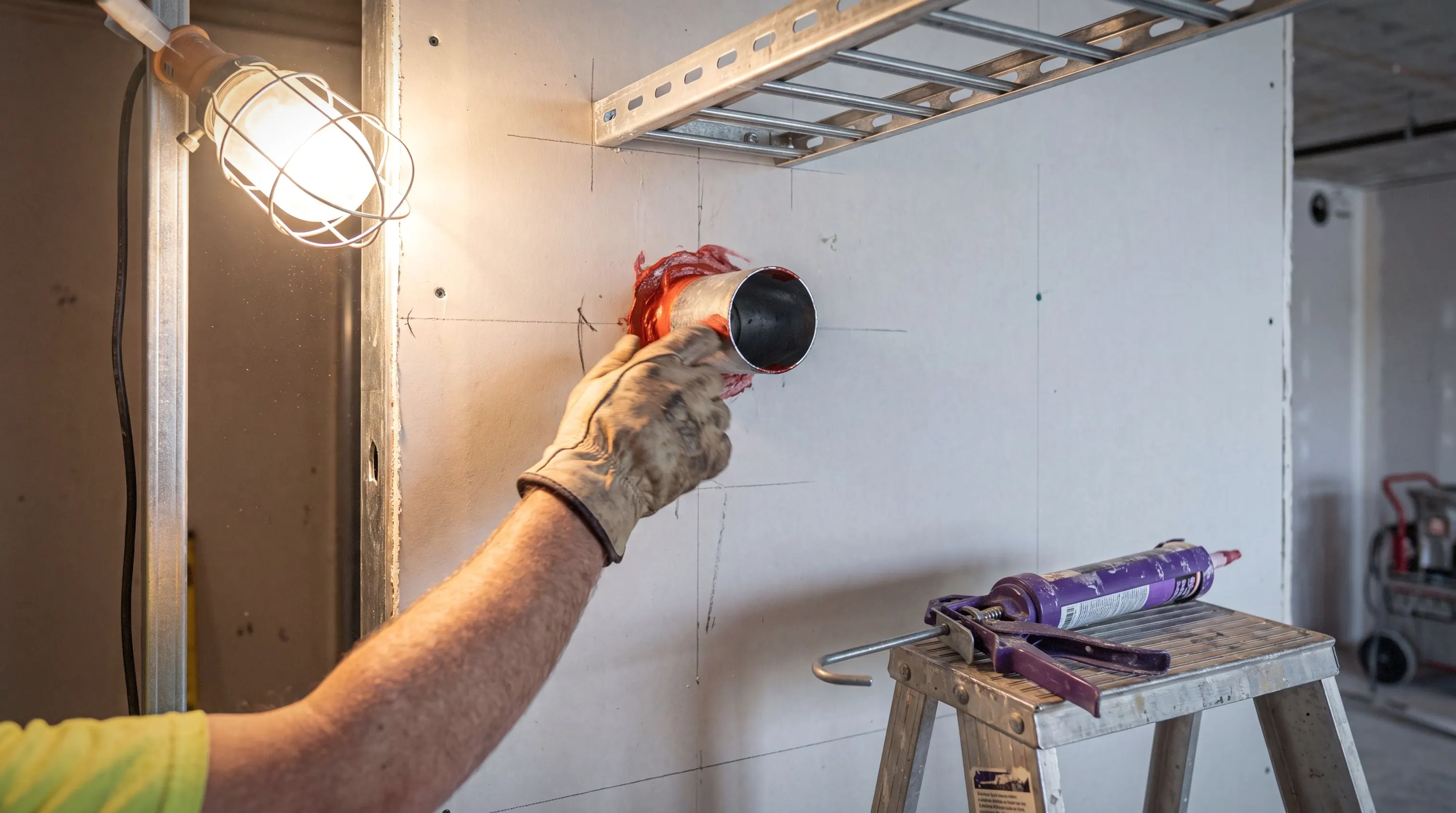
Insulating a hot pipe is about keeping energy in the pipe. Insulating a cold one is about keeping humid air off it, and that is a different job. If the vapour jacket is broken at a fitting or a hanger, moisture reaches the cold surface, condenses inside the insulation, and the run stays wet from then on. Fittings, valves and hangers are where these systems fail, which is why they get the same attention as the straight runs.
Is this the right scope for your building?
When it applies
- Cold lines are sweating or dripping
- Existing insulation is damaged, torn or missing sections
- Distribution losses or duct noise are affecting occupied space
When something else comes first
- The equipment itself is undersized or failing, which is a mechanical scope
- The moisture is coming from a leak rather than condensation
Straight runs are the easy part. A system insulated everywhere except its fittings and hangers will still sweat at those points, so the scope either includes them or it is not worth doing.
How the work runs
Our process
Survey of the runs
Line types, operating temperatures, existing condition and where condensation is occurring.
Material selection
Matched to the service temperature and to whether vapour control is required.
Access and scheduling
Coordinated with the mechanical contractor and the building's operating hours.
Installation including fittings
Straight runs, fittings, valves and hangers, so the system has no cold breaks.
Inspection
Continuity of the vapour jacket checked along the full run.
About this service
Questions we get on this one.
Specific to mechanical pipe & duct insulation. Tap a question.

Eco-Therma
Usually replies the same day
Why insulate ducts that are already inside the building?
Because the air inside them is not at room temperature. Uninsulated runs lose capacity along the way and sweat wherever they pass through warm humid air.
What causes the dripping on chilled lines?
Condensation on a surface below the dew point. Continuous insulation with sealed joints keeps that surface above it — a gap at a hanger or a fitting is enough to start it again.
Can this be done on a live system?
Much of it can, in sections. Anything that requires a shutdown is identified up front so it can be scheduled with you.
A practical next step
Request a review on mechanical pipe & duct insulation.
Send the project details, the scope and any drawings or specifications you already have. We review them before quoting and come back with what still needs to be confirmed.