
Insulation notes
Spray Foam Insulation in Ontario: Pros, Cons & What Homeowners Should Know
December 15, 2025
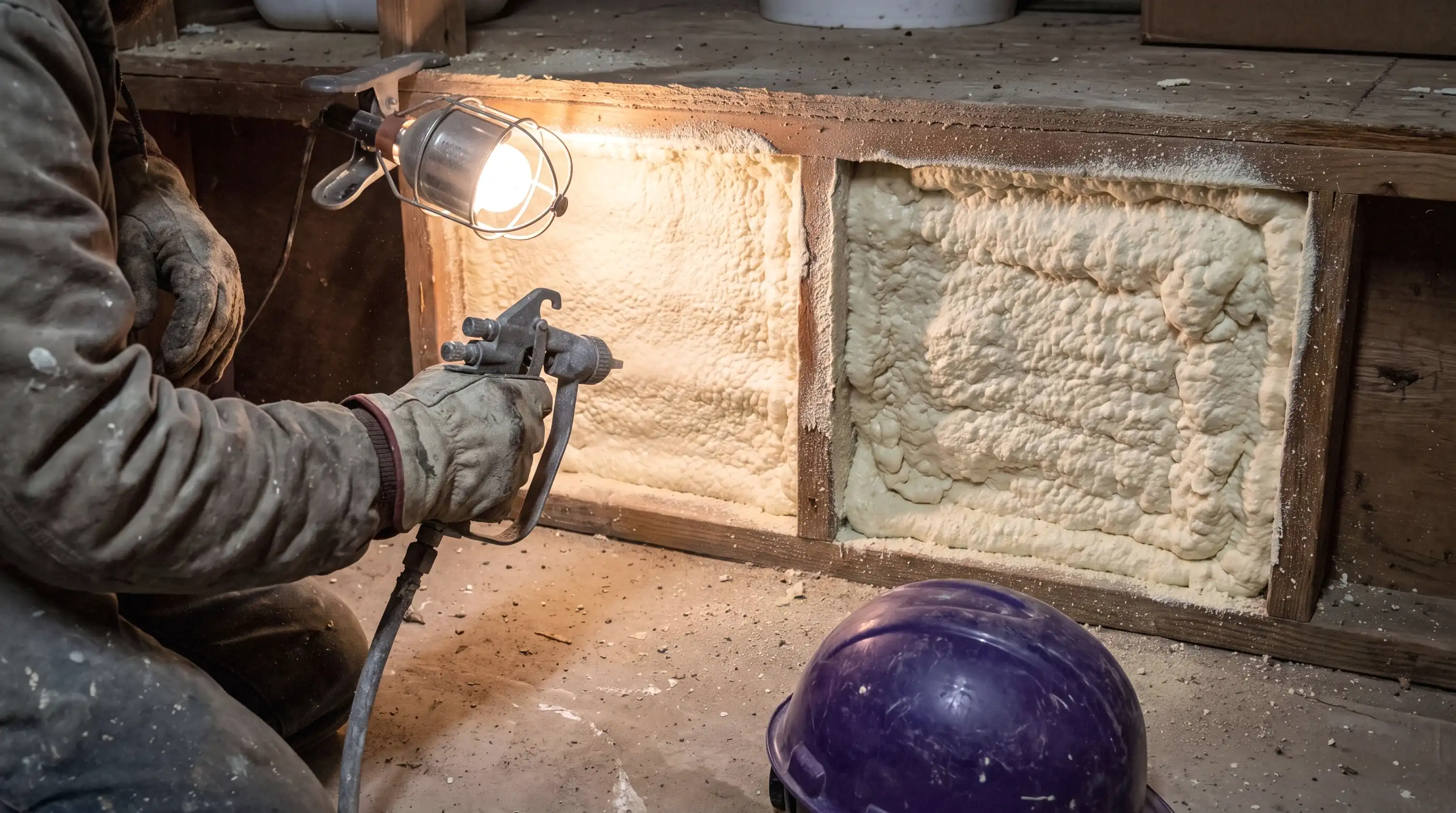
At Eco-Therma, we inspect attics across Ontario every week, and spray foam is one of the most misunderstood insulation options homeowners ask us about. This guide breaks down what spray foam does well, where it makes sense, and what many homeowners aren’t told before choosing it — especially in existing Ontario homes.
What Is Polyurethane (Spray Foam) Insulation?
Polyurethane insulation is created by mixing two liquid components that expand rapidly when sprayed. The material hardens into a foam that both insulates and air-seals at the same time.
It is commonly applied to:
- Attic roof decks
- Walls and ceilings
- Rim joists
- Crawl spaces
- Irregular or hard-to-seal areas
The Two Main Types
- Closed-cell spray foamHigher density, higher R-value per inch, and acts as a vapor barrier.
- Open-cell spray foamLighter, more flexible, lower R-value, primarily used for sound control and air sealing.
Why Spray Foam Is Considered High-Performance
Spray foam has real technical advantages that explain its popularity.
High R-Value per Inch
Closed-cell spray foam delivers one of the highest R-values per inch among commonly used insulation materials. This makes it useful when insulation thickness is limited.
Excellent Air Sealing
Because it expands on contact, spray foam can effectively seal cracks, gaps, and irregular framing. Since air leakage is one of the biggest sources of heat loss in Ontario homes, this characteristic matters.
Long-Term Durability
Closed-cell spray foam resists moisture absorption and does not sag or settle over time. This durability is why it’s often used in new construction, commercial buildings, and specific problem areas.
Cost vs. Real-World Results (An Important Reality)
Spray polyurethane foam is one of the most expensive insulation options on a per-square-foot basis.
While it offers excellent performance per inch, many Ontario homeowners are surprised to learn that:
- Achieving a similar overall attic R-value can often be done without spray foam
- In large, open attic spaces, the comfort and energy-saving difference is often marginal
- The price difference, however, can be significant
We regularly meet homeowners who were quoted spray foam for an entire attic, only to discover that a targeted air-sealing upgrade combined with blown insulation would deliver nearly the same comfort and energy savings — at a fraction of the cost.
In real-world terms:
This is why insulation decisions should focus on whole-home performance and return on investment, not just material specifications.
Where Spray Foam Makes Sense
Spray foam can be an excellent solution when:
- Space is limited (cathedral ceilings, rim joists)
- Air sealing is difficult using traditional methods
- Assemblies are complex or irregular
In these targeted situations, its ability to insulate and air-seal at the same time can be a real advantage.
Important Considerations Most Homeowners Aren’t Told
Spray foam is not a “bad” product — but it is a permanent one.
Because it adheres directly to surfaces, it often encapsulates building components that may need future access.
Electrical Wiring
Spray foam is not electrically conductive, and modern wiring is generally rated for insulation contact. However:
- Future electrical work becomes more complexAccessing buried wires or junction boxes often requires cutting hardened foam.
- Code compliance mattersElectrical junction boxes must remain accessible. Improper installation can unintentionally cover areas that should remain serviceable.
- Older wiring should be evaluated before encapsulation.
In older Ontario homes, it’s common to discover electrical junctions or modifications homeowners didn’t even know existed until insulation work begins.
Plumbing and Mechanical Lines
Encasing plumbing in spray foam can reduce freezing risk and improve air sealing around penetrations.
That said:
- Repairs become more invasive if leaks occur
- Moisture issues may take longer to detect if components are hidden
Spray foam doesn’t cause plumbing failures — it can simply make future diagnostics and repairs more involved.
Roof Decks and Structural Elements
When spray foam is applied directly to roof sheathing:
- Airtightness improves
- Thermal performance increases
However:
- Early signs of roof leaks can be harder to detect
- Moisture may travel before becoming visible
This is one reason many building scientists still recommend vented attic systems with accessible insulation for certain Ontario home designs.
Spray Foam vs Other Attic Insulation Options
There is no universal “best insulation” — only the best solution for a specific home.
Insulation Type
Best Use Case
Spray Polyurethane Foam
Tight spaces, complex assemblies, targeted air sealing
Blown Fiberglass
Cost-effective attic upgrades, fast installation
Cellulose
Dense coverage, sound control, eco-friendly
Hybrid Systems
Air sealing + blown insulation for balanced performance
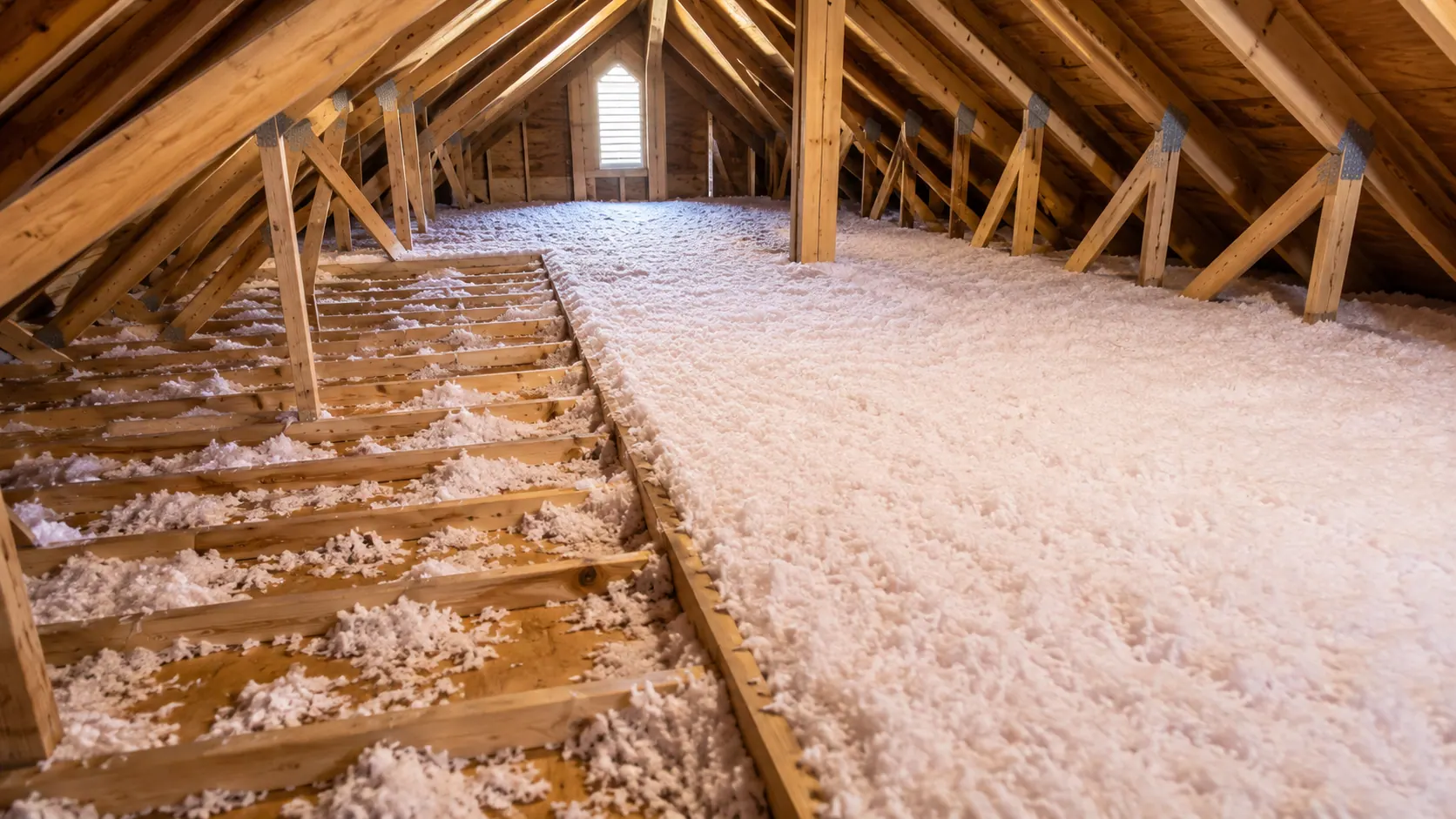
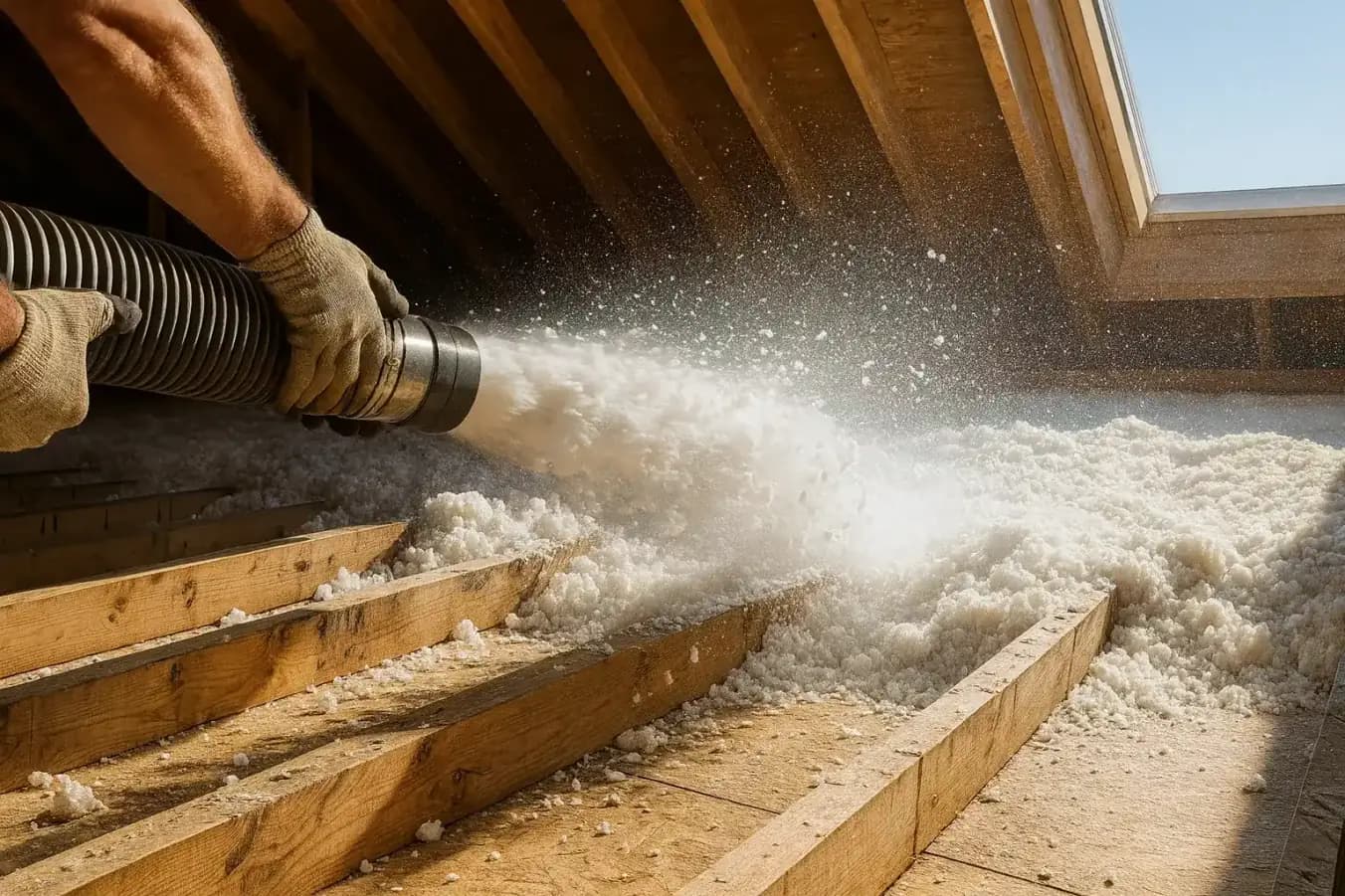
In many existing Ontario homes, excellent results are achieved by:
- Proper air sealing
- Correct attic ventilation
- Increasing total attic R-value
- without permanently encapsulating wires, pipes, or roof decks.
Eco-Therma’s Expert Approach
Eco-Therma specializes in:
- Attic insulation upgrades
- Insulation removal (fiberglass, vermiculite, sawdust, etc.)
- Air-sealing optimization
- Mold-related attic solutions
Our recommendations are material-agnostic and performance-driven.
If spray foam is the right solution for a specific application, we’ll say so.If another approach offers better long-term value, flexibility, or return on investment, we’ll explain why.
That’s how informed decisions are made.
The Right Question to Ask
Instead of asking:
“What’s the best insulation?”
A better question is:
“What insulation strategy gives my home the best comfort, durability, and return on investment in Ontario’s climate?”
That answer depends on the home — not the headline.
Get a Clear, Honest Recommendation for Your Attic
A proper attic evaluation looks beyond R-value alone.It considers air leakage, moisture, ventilation, access, and long-term serviceability.
👉 Request an Eco-Therma attic inspection and get expert guidance — no pressure, no one-size-fits-all solutions.
Tags:
- Insulation
- Attic
- Blown
- Sprayfoam
- Polyurethane
- Sealing
- Energy
- Savings
- Cooling
- Heating
- Insulation Types
Where this applies
About these articles
Tap a question, get a straight answer.
Tap a question and the answer comes back. Anything specific to your attic, we sort out on the call.

Eco-Therma
Usually replies the same day
Who writes these articles?
Eco-Therma writes these articles for Ontario homeowners, about attic conditions the crews see in the field. Each article explains what a material or a condition actually does, rather than selling a product.
Will an article tell me what my attic needs?
An article will help you understand the options and what changes the answer. What your attic needs specifically comes from an Eco-Therma quote on your own address.
Why is there no pricing in the articles?
Because the number would be wrong for most readers. Attic size, existing condition, access and the work required all move it, so we explain what changes the price and quote the actual project.

Want this checked in your own attic?
Send your address and the approximate attic size. A remote quote comes back — no attic access needed.