
Insulation notes
Attic Mold Remediation Toronto Quote: How to Compare Two Offers
November 24, 2026
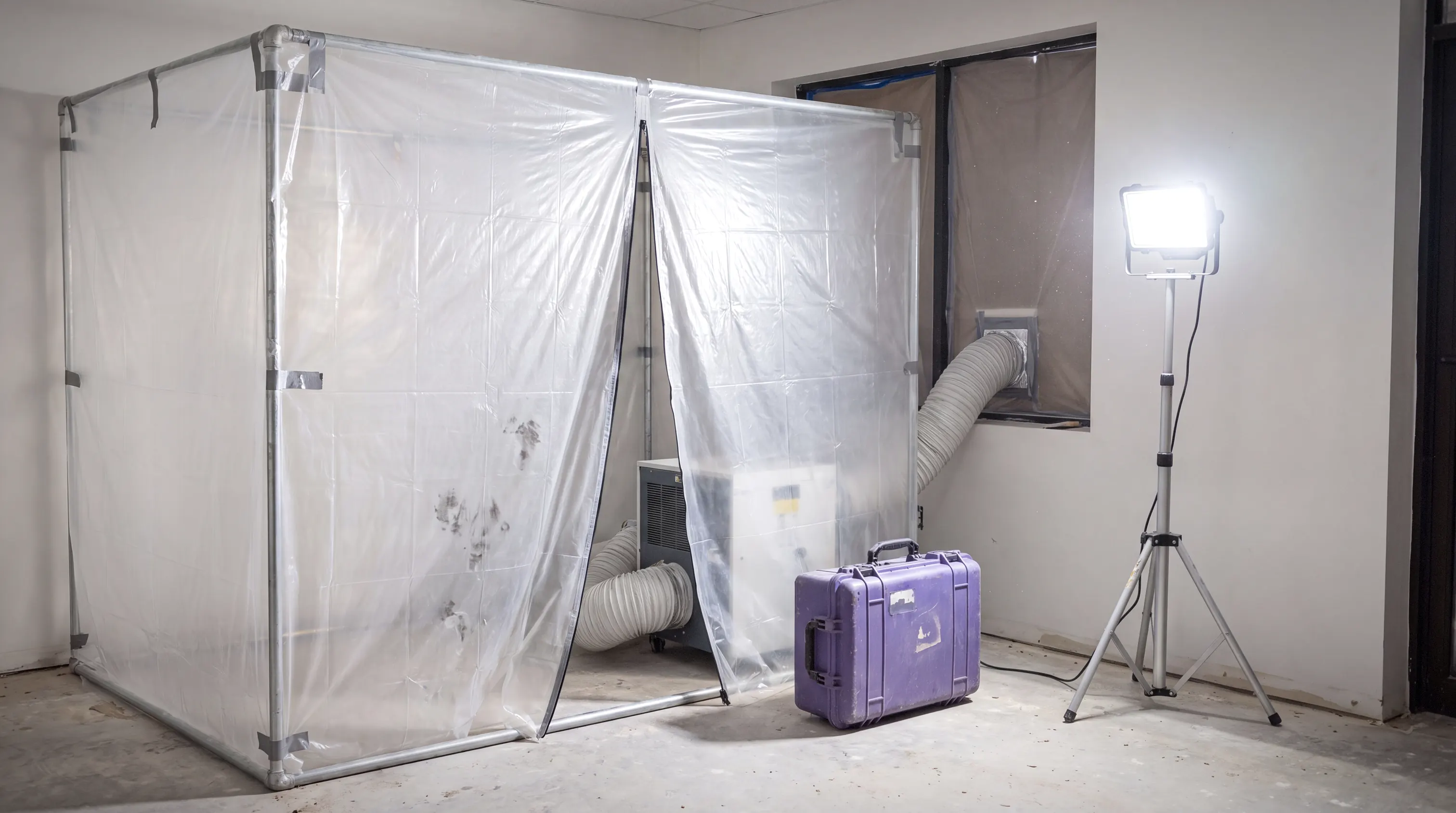
To compare two attic mold remediation Toronto quotes, start with the scope, not the total. Check whether each document defines the affected area, names the likely moisture source, separates removal from cleaning, describes containment, and lists the records you will receive at the end. Two quotes can look alike and still cover different work.
What each quote must describe
A usable quote states what is included and what is left out. Look for:
- The affected area and its depth, written in the document and not only implied by a total.
- The materials involved: insulation, roof decking, framing, and any stored items or wet boxes.
- The excluded areas, with the reason for each exclusion.
- Whether contaminated insulation is removed or only treated on the surface.
- Who handles disposal of waste, and how that disposal is recorded.
If one quote says "clean the attic" and the other lists removal, sealing and replacement, the two are not comparable yet. Ask both contractors to put the same scope in writing before you decide.
Find the moisture cause before you compare prices
Mold in an attic is usually a symptom. The same cold room upstairs can come from insulation that is too shallow, air leaking through the ceiling, or a ventilation path that was blocked years ago. Eco-Therma's own description of its work starts from this point: an attic rarely has only one problem, [which is why the surrounding work exists](https://www.eco-therma.com/about).
A good quote separates what was observed from what was assumed. It should say where the moisture is likely coming from, what evidence supports that conclusion, and what can only be confirmed once the attic is open. Anything that cannot be established without opening something up should be written down as an unknown, not guessed at. A quote that names one cause with full confidence, before anyone has looked at the address, deserves a closer question.
Hypothetical example: two quotes arrive for the same attic. The first lists removal of wet insulation, containment, disposal records and a ventilation check. The second lists surface cleaning and new insulation over the existing layer. The second quote leaves the wet material in place. Even if its total is lower, it does not cover the same work.
Removal comes before new insulation
Removal or remediation sometimes has to happen before new insulation goes in. Adding material over a wet or contaminated layer hides the problem, and the homeowner often pays twice: once for the new layer and again when the contaminated material has to come out. A quote should state clearly whether the existing insulation is removed or only treated.
If you are considering an attic insulation top-up, ask whether the existing layer was assessed for moisture and contamination first. For the removal step itself, see attic insulation removal.
Containment, dust and documents
Protection is where two quotes often differ most without anyone noticing. Compare:
- How the work area is contained, and how the living space below is protected.
- Dust control during removal and cleaning.
- Protection of occupants, including whether anyone must leave the area during the work.
- Removal and disposal of waste.
- The sanitizing steps, and whether the products or methods are described.
For the cleaning and sanitizing step, see attic decontamination and sanitizing.
Then look at the documents. A complete handover usually includes before and after photos, a description of the treated areas, a log of removed materials, and corrective recommendations. A quote that lists no documents leaves you no way to check the result.
Ask also how the final work is verified. Eco-Therma's stated process runs in six steps, in this order: first conversation, remote quote, written scope, preparation and protection, the work, then [verification against the written scope](https://www.eco-therma.com/resources/warranty-and-process). Ask every contractor the same question.
Ventilation and air sealing
Two quotes can both remove mold and still leave the attic in the same condition. Check whether each one addresses:
- An unobstructed air path between the insulation and the roof deck, with blocked soffits either corrected or clearly excluded.
- Air leakage at the ceiling, around pipe and wiring penetrations, and at the access hatch. These should be assessed as separate items.
- Whether ventilation work is included in this quote or deferred to a later phase.
Where ventilation is part of the picture, see attic ventilation.
What makes the price vary
Price is usually where people start, and it is the last thing to read carefully. This article does not give a figure, and Eco-Therma does not publish one. The price moves with:
- The size of the attic and the area affected.
- The condition of the existing material, including how deep the contamination goes.
- Access to the attic and the route for removing material.
- The materials that must be removed, treated or replaced.
- The preparation and protection needed for the occupied space below.
- The finish and any related work, such as air sealing or ventilation.
Eco-Therma's [public FAQ](https://www.eco-therma.com/faq) deliberately carries no price for this reason: attic size, existing condition, access and the work required all move it. The practical step is a written quote on the actual address. Send us your address. We'll measure the attic remotely, then send a Fast Remote Quote you can read line by line against the other offer.
Check the warranty wording too. The warranty covers workmanship, and its exact term and coverage are [confirmed in writing with the quote](https://www.eco-therma.com/resources/warranty-and-process), before anything is scheduled. Compare that wording with the other contractor's terms, not only the length of the warranty.
For property managers and general contractors, Eco-Therma's [service area](https://www.eco-therma.com/areas) covers Toronto, the GTA and surrounding areas, including Mississauga, Brampton, Vaughan, Markham, Oshawa and Caledon.
Where this applies
Questions about this
Tap a question, get a straight answer.
Tap a question and the answer comes back. Anything specific to your attic, we sort out on the call.

Eco-Therma
Usually replies the same day
How hard is it to get rid of mold in the attic?
According to Eco-Therma, the difficulty depends on how far the growth has spread, where the moisture comes from, how easily the attic can be reached, and which materials are affected. Surface cleaning rarely settles the problem if the moisture source stays in place. A written scope based on the actual attic shows which parts are known and which can only be confirmed once the attic is opened.
Does an attic insulation top-up cover mold remediation in Toronto?
As Eco-Therma explains, not by itself. An attic insulation top-up adds material, and if the existing insulation is wet or contaminated, it should be assessed and removed first, or the problem stays under the new layer. Ask each Toronto contractor whether the quote includes removal or only a top-up.
What should a quote say about the warranty?
The warranty covers workmanship, and its exact term and coverage should be confirmed in writing with the quote, before anything is scheduled. Compare the wording of both quotes rather than only the number of years. Vague or unwritten terms are a reason to ask for clarification before you decide.
Can a price be given without seeing the attic?
Eco-Therma does not publish a general figure, since attic size, existing condition, access and the work required all change it. Send us your address and we will measure the attic remotely to produce a Fast Remote Quote. Anything that cannot be established without opening the attic is listed as an unknown in the written scope.

Want this checked in your own attic?
Send us your address. We'll measure the attic remotely and send a quote back, with no attic access needed.