
Insulation notes
Attic Insulation Removal in Toronto: When It's Needed and What to Expect
October 16, 2026
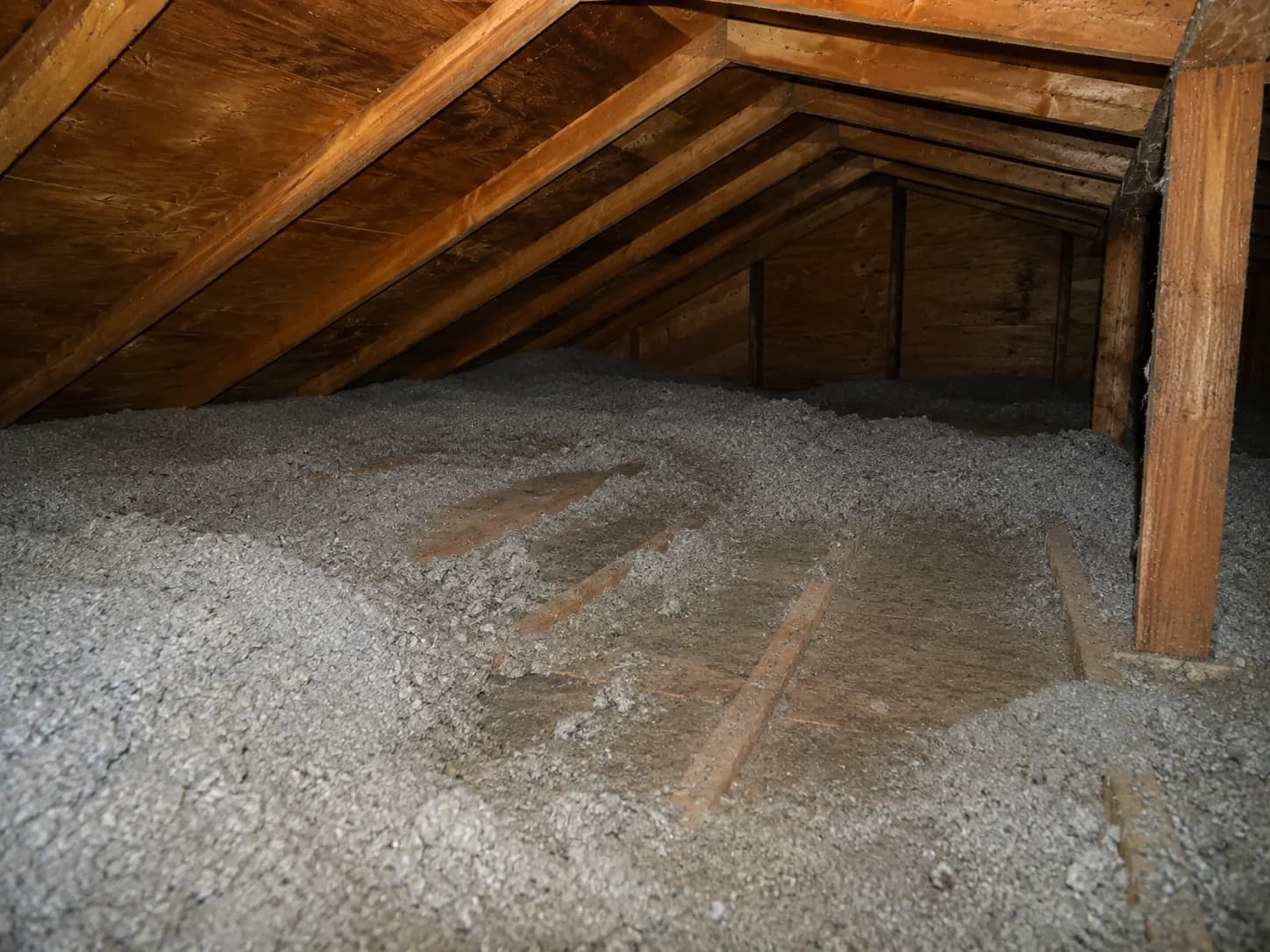
Attic insulation removal in Toronto is needed when existing material is wet, contaminated, crushed flat, or mixed with debris that a simple top-up would just bury. For homes across the GTA, removal clears the deck so new insulation, air sealing, and proper ventilation can actually perform the way they're supposed to, instead of sitting on top of a problem that keeps working against the house.
When Attic Insulation Removal Is Actually Needed in Toronto
Not every cold room or high heating bill means a full removal job. A lot of older houses in Toronto neighbourhoods just need a top-up over insulation that's still in reasonable shape. Removal becomes necessary when the material itself is the problem, not just the depth of it. That includes:
- Water staining, mould, or a musty smell from a past roof leak or plumbing issue
- Rodent or bird droppings, nesting material, or signs of a long-term pest problem
- Insulation so compacted or matted down that it no longer traps air
- Old materials that are a known health or handling concern in the attic, such as certain older vermiculite products
- A renovation that requires access to the deck, framing, or mechanicals under the insulation
If none of that applies, a top-up is usually the simpler and more direct path. If one or more of those apply, removal and decontamination has to happen first, because adding new material over a wet or contaminated layer just hides the problem. The homeowner ends up paying for insulation twice: once for the material that gets buried and once for the job that eventually has to undo it.
Signs From Inside the House Don't Tell You Which Fix You Need
A cold upstairs bedroom, ice damming at the eaves, or a summer that turns the second floor into an oven: these are symptoms, not diagnoses. The same cold room can come from thin or settled insulation, air leaking up through pot lights and the attic hatch, or a ventilation path that's been blocked for years. Removal fixes a contamination or compaction problem. It does not fix an air sealing problem on its own, and it won't fix a blocked soffit or baffle either.
That's why a quote has to look at the actual attic, the actual roofline, and the actual house age before anyone can say what's needed. Guessing from the living room leads to the wrong scope.
What Happens During Attic Insulation Removal
A removal job generally follows the same order on every house:
- Protection of the work area. Flooring, stairwells, and furniture near the attic hatch get covered before anything is disturbed.
- Containment. The attic access point is sealed off so dust and old material don't travel into the living space.
- Extraction. Old insulation is removed, typically with commercial vacuum equipment for loose-fill material, or by hand for batts and debris.
- Decontamination and sanitizing, when droppings, mould, or odour are present. This step is what separates a straightforward removal from one that also needs disinfecting before anything new goes in.
- Inspection of the deck and framing, now visible, for rot, staining, or damage that needs to be flagged before new insulation goes down.
- Disposal of the removed material off-site.
Anything that can't be confirmed without opening something up, like what's behind a soffit or under a vapour barrier, gets written down as an unknown rather than guessed at. That unknown gets resolved once the attic is actually open, not before.
What Affects the Scope, and Why There's No Published Price
Attic insulation removal in Toronto doesn't have one standard cost, because the work itself isn't standard. What moves the scope, and therefore the quote:
- Attic size and roof footprint, which set the baseline amount of material to remove
- Existing condition, since contaminated or wet insulation takes more time and different handling than dry, uncontaminated material
- Access, including hatch location, attic height, and whether equipment can reach the area easily
- What's found once the attic is open, such as deck damage or a ventilation path that needs rebuilding alongside the removal
A quote starts remotely: from the address, the roof and attic footprint, and the age of the house, a range comes back without needing to book a visit first. That range gets confirmed once the attic is actually seen. If you want to see how that applies to your own house, you can request a free quote and get a scope specific to your attic rather than a generic number.
How the Work Is Scheduled and Backed
Every project follows the same six steps, in the same order: an initial conversation, a remote quote, a written scope of work, preparation and protection of the home, the work itself, and a final verification against what was written down. The workmanship warranty, including its exact term and what it covers, is confirmed in writing with the quote, before anything gets scheduled. Nothing starts on a verbal estimate.
This applies whether the job is a single detached house, a multi-unit building, or a commercial property. Property managers and general contractors get the same written scope and the same verification step at the end, which matters when more than one unit or building is involved.
Eco-Therma serves Toronto and the surrounding GTA, including Mississauga, Brampton, Vaughan, Markham, Oshawa, and Caledon. You can check the full list of areas served or read more on the blog about attic air sealing, ventilation, and top-ups if removal turns out not to be what your attic needs.
Where this applies
Questions about this
Tap a question, get a straight answer.
Tap a question and the answer comes back. Anything specific to your attic, we sort out on the call.

Eco-Therma
Usually replies the same day
How do you remove old insulation from an attic?
According to Eco-Therma, the attic access is sealed off to protect the rest of the house, then loose-fill material is extracted with commercial vacuum equipment while batts and debris are removed by hand. If droppings, mould, or odour are present, decontamination and sanitizing happen before any new insulation goes in, and everything removed is hauled off-site.
How much does attic insulation removal cost in Toronto?
There's no set price, because attic size, existing condition, access, and what's found once the attic is opened all affect the scope. A remote quote can give you a range from the address and roof footprint, confirmed once the attic is seen. The most accurate way to get a number is to request a free quote.
Is R60 attic insulation worth it for a Toronto home?
As Eco-Therma explains, Whether a higher R-value makes sense depends on the current depth, the attic's air sealing, and how the house actually performs in winter and summer, not on R-value alone. A cold room can come from thin insulation, air leakage, or blocked ventilation, so a quote on the actual attic is what settles which upgrade applies.
Does removing roof insulation cost more than a standard top-up?
Removal generally involves more steps than a top-up, including extraction, possible decontamination, and disposal, so it takes more time when the existing material is wet, contaminated, or compacted. The exact scope and price depend on attic size and condition rather than a flat rate, which a quote on the specific house will confirm.
When is insulation removal needed instead of just adding more?
According to Eco-Therma, removal is needed when the existing material is wet, mouldy, contaminated by pests, badly compacted, or when a renovation requires access underneath it. If the insulation is simply thin but otherwise in good condition, a top-up over it is usually enough, and attic insulation removal in Toronto homes is reserved for the cases where the material itself is the problem.

Want this checked in your own attic?
Send your address and the approximate attic size. A remote quote comes back — no attic access needed.